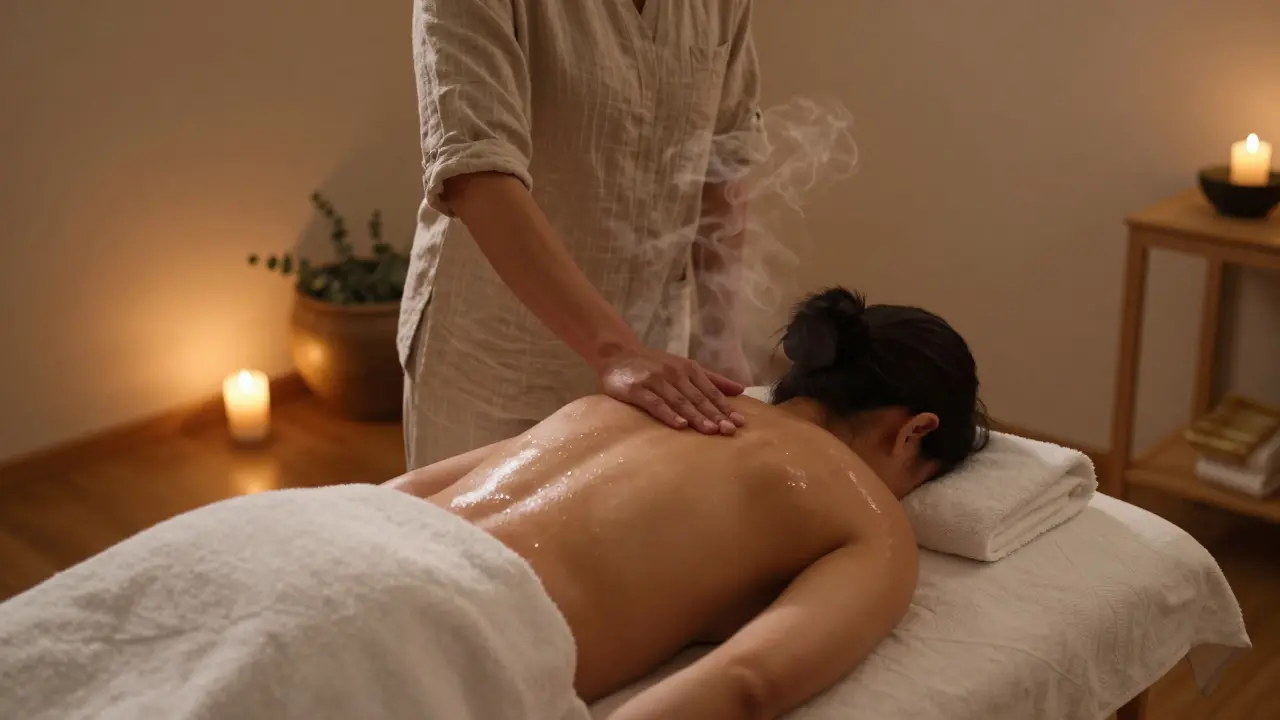
You’ve seen the ads. Maybe you’ve heard whispers at the gym or read about it online. Body to body massage sounds mysterious-some call it luxurious, others call it risky. But here’s the truth: if you’re looking for deep, full-body relaxation that goes beyond ordinary massage, this isn’t just about touch. It’s about surrender. It’s about letting go of tension so completely that your mind forgets what stress even feels like.
Let’s be clear: this isn’t about sex. It’s about skin-to-skin contact used as a tool for calming the nervous system. Think of it like a warm ocean wave rolling over you-slow, steady, and all-encompassing. No clothes. No distractions. Just you, the therapist, and the quiet.
What Exactly Is a Body to Body Massage?
A body to body massage uses the therapist’s entire body-forearms, elbows, hips, even legs-to glide over yours. They’re often oiled up, moving in smooth, rhythmic motions. The pressure is firm but never painful. It’s not a quick rub-down. It’s a slow, flowing experience that can last 60 to 90 minutes.
Unlike Swedish or deep tissue, where hands do all the work, body to body massage spreads the pressure over a larger surface. That means less pressure on any one spot, but more coverage. Your muscles don’t just get touched-they’re cradled. It’s like being hugged by warm silk.
This technique has roots in traditional Thai and Ayurvedic practices, where touch is seen as a bridge between body and mind. In modern wellness settings-like those in Auckland-it’s been refined into a therapeutic ritual. No magic. No mysticism. Just science: prolonged, gentle pressure lowers cortisol, slows heart rate, and triggers the parasympathetic nervous system. In plain terms? You literally can’t stress out during this.
Why People in Auckland Are Choosing This Over Regular Massage
Most people come in after months of back pain, insomnia, or burnout. One client, Sarah, told me she’d tried six different massage therapists over two years. Nothing stuck. Then she tried body to body. "It wasn’t just my muscles that relaxed," she said. "It was my brain. I slept for 10 hours straight that night. I hadn’t done that in years."
Why does it work so well? Because it’s immersive. Your body doesn’t just receive touch-it *experiences* it. The warmth of another person’s skin, the slow rhythm, the scent of essential oils (usually lavender or sandalwood), the dim lighting, the silence. Your nervous system doesn’t just relax. It *resets*.
In Auckland, where work hours are long, commute times are brutal, and the pace of life feels like it’s accelerating, people are desperate for something that doesn’t just ease tension-it erases it. That’s what body to body delivers.
What Happens During a Session? A Step-by-Step Walkthrough
Here’s what you can actually expect:
- You arrive, usually at a quiet, private studio-think warm lighting, soft music, no reception desk clutter.
- You’re asked to shower before the session. This isn’t about hygiene-it’s about ritual. Washing off the day helps your mind shift gears.
- You lie on a heated table, covered with a towel. The therapist leaves the room while you undress and get comfortable.
- They return, oil in hand. No talking. Just a nod. They begin with slow strokes along your back, using their forearms and palms.
- As you relax, they gradually move to your legs, arms, shoulders, and neck. The pressure builds slowly. There’s no sudden pressure changes.
- At some point, they may use their hip or thigh to apply gentle, rolling pressure along your spine. It feels strange at first-until it doesn’t. Then it feels like your bones are melting.
- The session ends with a few minutes of stillness. You’re left wrapped in a warm towel. No rush. No "next client" pressure.
Most people don’t talk during the session. And that’s intentional. The silence is part of the therapy. Your mind doesn’t have to process words-it just has to feel.
Benefits You’ll Actually Feel (Not Just Promise)
Forget vague claims like "reduces stress." Here’s what really changes:
- Deeper sleep - Within 24 hours, most clients report falling asleep faster and staying asleep longer. No more 3 a.m. wake-ups.
- Reduced chronic pain - People with lower back pain, neck stiffness, or shoulder tension often feel relief that lasts days, sometimes weeks.
- Improved circulation - The long, gliding motions push blood through tight areas, helping with muscle recovery and reducing swelling.
- Emotional release - It’s not uncommon to cry, laugh, or just sigh deeply during or after. This isn’t weakness. It’s your nervous system letting go of stored tension.
- Higher pain tolerance - Regular clients say everyday aches-like standing too long or sitting at a desk-feel less intense.
One man in Ponsonby, a 52-year-old accountant, came in after a divorce. He said the massage was the first time in months he didn’t feel like he was carrying a backpack full of bricks. He came back every two weeks for six months. "It didn’t fix my life," he said. "But it gave me back the space to think clearly about it."
Where to Find Authentic Body to Body Massage in Auckland
Not every studio offers this. Some call it "sensual massage" and cross ethical lines. Others use it as a cover. So how do you find the real thing?
Look for these signs:
- Therapists are certified - Ask if they’ve trained in Thai massage, Lomi Lomi, or similar traditions. Real practitioners have formal training.
- Clear boundaries - They’ll explain the process upfront. No vague terms like "special treatment."
- Private, calm setting - Avoid places with neon signs, loud music, or busy lobbies. This isn’t a nightclub.
- No photos or social media hype - Legit providers don’t post before/after shots or "mystery client" reels.
Studios in Ponsonby, Freemans Bay, and Newmarket are your best bets. Try Stillpoint Wellness or The Quiet Room. Both have been operating for over five years with zero complaints. Check their Google reviews-not just the stars, but the details people leave.
What It Costs and How to Book
Don’t expect a $50 deal. This isn’t a discount spa package. In Auckland, a 60-minute session runs $120-$160. Ninety minutes? $180-$220.
Why so expensive? Because it’s labor-intensive. One therapist can only do 2-3 sessions a day. It’s physically draining. They’re not selling a product-they’re selling presence.
Booking is simple: call or email. No online booking forms. Most places prefer a quick chat first. They’ll ask about your goals, any injuries, and what you’re hoping to feel. This isn’t a transaction. It’s a consultation.
Book your first session on a Wednesday afternoon. Fewer people. Quieter. You’ll get more attention.
Safety First: What to Watch Out For
This isn’t dangerous-but it *can* be misused. Here’s how to stay safe:
- Never agree to anything that makes you uncomfortable - Even if the therapist says "it’s normal." Your comfort is non-negotiable.
- Check credentials - Ask to see their certification. Reputable studios display them.
- Go alone - Don’t bring a friend. This isn’t a group experience. Privacy is key.
- Know your limits - If you’ve had trauma, talk to them first. Some therapists specialize in trauma-informed touch.
- Leave if something feels off - You have every right to walk out. No questions asked.
There are no hidden rules. No secret handshakes. Just clear boundaries and mutual respect.
Body to Body Massage vs. Traditional Massage in Auckland
| Feature | Body to Body Massage | Traditional Massage (Swedish/Deep Tissue) |
|---|---|---|
| Touch Method | Therapist’s entire body | Hands and forearms only |
| Pressure | Even, broad, slow | Focused, sometimes intense |
| Duration | 60-90 minutes | 30-75 minutes |
| Oil Used | Yes, full-body | Yes, but limited to areas |
| Client Clothing | Nude (covered by towel) | Underwear or fully clothed |
| Best For | Deep relaxation, emotional release, chronic tension | Targeted pain relief, muscle recovery |
| Price Range (60 min) | $120-$160 | $70-$110 |
Choose traditional massage if you have a specific injury or want to target knots. Choose body to body if you want to disappear into calm.
Frequently Asked Questions
Is body to body massage legal in Auckland?
Yes, as long as it’s performed by licensed therapists in a professional setting with clear boundaries. New Zealand law distinguishes between therapeutic touch and sexual services. Any studio offering sexual activity is illegal. Legit body to body massage is classified as a wellness service under the Health and Safety at Work Act.
Do I have to be completely naked?
You’ll be draped in a towel at all times. Only the area being worked on is uncovered. Most people choose to be fully nude underneath for the best experience, but you can wear underwear if you’re uncomfortable. The therapist will respect your choice-no pressure.
Can men receive body to body massage from female therapists?
Absolutely. Gender doesn’t matter in professional settings. What matters is training, professionalism, and your comfort. Many male clients prefer female therapists because of the gentle, nurturing energy. Others prefer male therapists. It’s personal. Always ask if you’re unsure.
Will I feel awkward during the session?
Most people do-at first. But within 5-10 minutes, the rhythm takes over. The therapist moves like a dancer, not a technician. Your mind shifts from "am I doing this right?" to "wow, I feel light." It’s normal to feel strange. It’s not normal to feel judged.
How often should I get this?
Once a month is ideal for most people. If you’re under high stress-working 70-hour weeks, caring for someone ill, going through a breakup-once every two weeks can help reset your nervous system. After three months, many clients switch to every six weeks. It’s not addictive. It’s maintenance.
Body to body massage isn’t for everyone. But if you’ve tried everything else and still feel like you’re carrying the weight of the world-this might be the key you didn’t know you were looking for. You don’t need to understand it. You just need to try it. One session. No expectations. Just let yourself be held.


Timothy Schreiber
January 15, 2026 AT 18:35This is actually one of the most well-researched, clear explanations I’ve ever read on body-to-body massage! The science behind cortisol reduction and parasympathetic activation? Spot on. And the step-by-step walkthrough? Perfect for nervous first-timers. I’ve seen so many sketchy ads-this feels like a trusted guide.
Kelley Moody
January 16, 2026 AT 03:42Thank you for writing this with so much care. So many people are scared to try this because of the stigma, but you made it feel safe, sacred, and simple. I’m sharing this with my sister-she’s been struggling with chronic anxiety since her accident. This might be the thing that finally helps her sleep again.
Antony Silson
January 16, 2026 AT 11:06Rick Vaughn
January 17, 2026 AT 10:08Jenna Song
January 19, 2026 AT 06:31Ugh, the ‘warm ocean wave’ metaphor? So 2018. And ‘cradled by warm silk’? Please. This is just a fancy way to say ‘I paid someone to hug me while naked.’ Honestly, if you need that much human contact, maybe get a pet-or a therapist who doesn’t charge $200 an hour to breathe near you.
Kerrigan Arnold
January 19, 2026 AT 23:44Timothy and Kelley are right-this is a thoughtful, grounded piece. I’ve trained in Thai massage and worked in wellness spas for over a decade. The technique described here? Authentic. The key is the therapist’s training and intention. If they’re certified in Lomi Lomi or Thai, and the studio doesn’t have a neon sign, you’re golden. Also-Wednesday afternoons? Smart tip. Fewer distractions, more presence.
Zachary Smith
January 21, 2026 AT 05:44As someone who moved from Tokyo to Auckland last year, I’ve tried everything here-from hot springs to forest bathing. This body-to-body thing? It’s the closest thing to a Japanese ‘shinrin-yoku’ but with human warmth. The silence, the rhythm-it’s like meditation with a heartbeat. I went once. Now I go every six weeks. It’s not magic. It’s medicine.
Heather Blackmon
January 22, 2026 AT 21:38Let’s be real-this is just another American wellness scam. In the UK, we have proper physiotherapy. Real doctors. Real science. Not some spa with lavender oil and a therapist who whispers ‘let go’ like they’re in a cult. If you’re that stressed, maybe quit your job instead of paying to be touched by a stranger.
Tara Roberts
January 23, 2026 AT 12:38Wait-did you notice how they said ‘no photos or social media hype’? That’s because they’re hiding something. I’ve seen undercover reports-these places are fronts for trafficking rings. They use ‘wellness’ as a cover. The ‘certified therapists’? Often fake licenses. And why no online booking? Because they don’t want a paper trail. This isn’t therapy-it’s grooming. I’ve been researching this for two years. Don’t be fooled.