You’ve heard the whispers. Maybe you saw a flyer tucked under a car windshield near Al Fahidi Historical Neighbourhood. Or maybe a friend mentioned it in hushed tones over shisha at a rooftop lounge. Bur Dubai has long been a quiet corner of the city where people seek privacy - and sometimes, companionship. But if you’re asking about Bur Dubai call girls, you’re not just curious. You’re weighing a decision. And that’s okay. Let’s cut through the noise and talk real.
What You’ll Actually Find in Bur Dubai
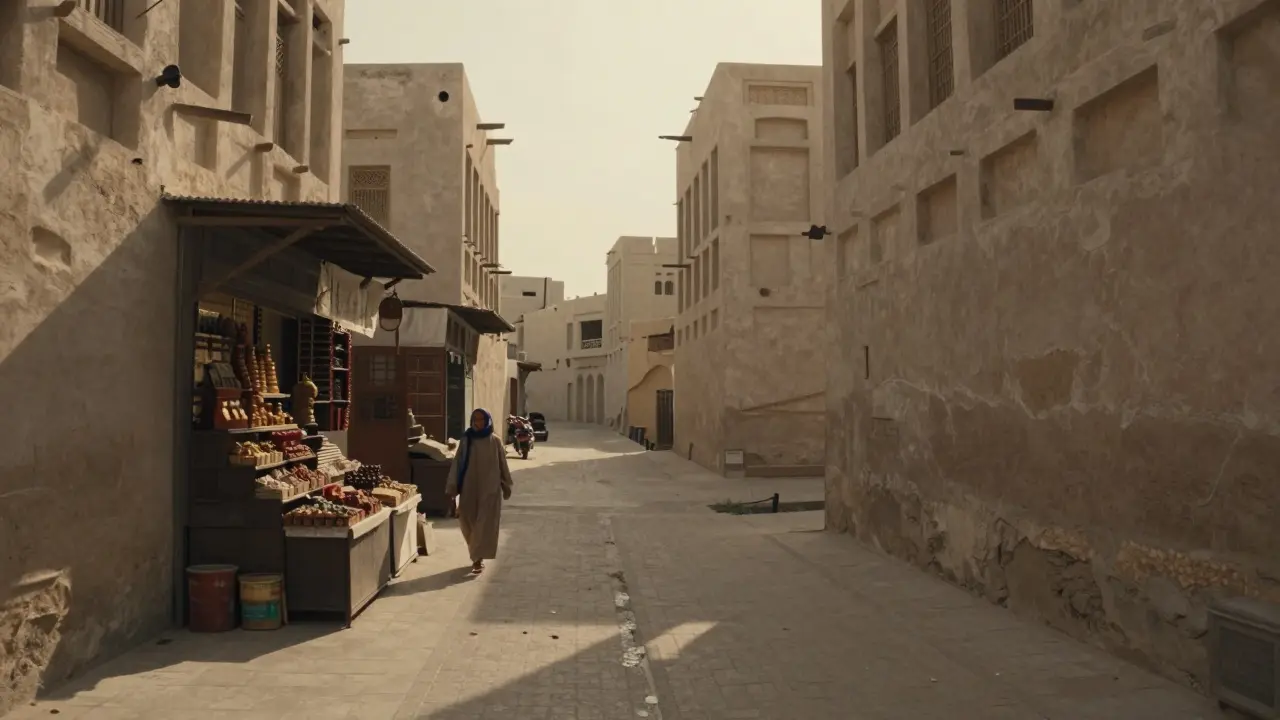
Let’s be clear: Bur Dubai isn’t like the glittering towers of Downtown or the party zones of JBR. It’s older, quieter, more lived-in. The alleyways near Al Ras and the old souks still carry the scent of cardamom coffee and diesel. And tucked between spice shops and family-run guesthouses, you’ll find women who offer companionship - not just sex, but conversation, company, sometimes even emotional presence.
These aren’t Hollywood stereotypes. Most are local women, some from the Gulf, others from Eastern Europe or Southeast Asia, working independently or through small, discreet networks. Many are single mothers, students, or women escaping difficult circumstances back home. They’re not looking for fame. They’re looking for dignity, safety, and a way to pay rent.
Why People Seek Services in Bur Dubai
Why here? Because Bur Dubai feels safe. It’s not crowded with tourists. There are no cameras on every corner. The police don’t patrol these streets like they do in Dubai Marina. It’s a place where you can be anonymous. Where a businessman from Riyadh can meet someone without being seen by his colleagues. Where a lonely expat can talk to someone who doesn’t ask for his LinkedIn profile.
It’s not about lust. It’s about loneliness. It’s about needing someone to listen without judgment. One woman I spoke with - let’s call her Layla - told me: “I don’t sell my body. I sell my time. And sometimes, my time is all someone has left.”
Types of Services Offered
There’s no one-size-fits-all here. The offerings vary by person, by need, by budget.
- Companionship only - Dinner, walk along the creek, coffee at Al Seef. No physical contact. Some clients just want to feel seen.
- Evening appointments - 2-4 hours at a hotel or private apartment. Includes conversation, drinks, intimacy. Most common.
- Overnight stays - Rare. Usually only with repeat clients. Requires trust. Often more expensive.
- Virtual sessions - More common since 2023. Video calls, voice chats. No travel. Lower cost. Growing fast.
There are no standardized packages. Every interaction is negotiated privately. No menus. No price lists posted online. That’s by design.
How to Find Them - The Real Way
Forget Google. Forget Instagram. Forget those sketchy websites that charge $50 just to show you a blurry photo.
The real way? Word of mouth. Locals know. Expats who’ve been here five years know. If you’re serious, ask someone you trust - someone who’s been in Dubai long enough to know the difference between a scam and a real connection.
Some use encrypted apps like Telegram or Signal. Others rely on discreet messaging services through local cafes that double as informal hubs. The Al Fahidi Guesthouse near the creek? A few of the staff know who to refer. Not because they’re involved - because they’ve seen enough to know who’s safe and who’s not.
Don’t text random numbers. Don’t reply to ads with “I’m interested.” That’s how you get scammed. Be direct. Be respectful. And never, ever ask for a photo before you’ve had a voice call.

What to Expect During a Meeting
If you’re lucky, you’ll meet someone who’s calm, clear-eyed, and knows exactly what she wants. She’ll show up on time. She’ll have a clean room. She’ll ask you questions too - not just about your job, but about your life. Did you miss your family? Are you happy here? What do you miss about home?
The session usually lasts two to three hours. There’s no rush. No pressure. No script. Some talk. Some sit in silence. Some cry. That’s normal.
She won’t wear a costume. She won’t play a role. She’ll be herself - tired, maybe, but present. And if you treat her like a person, not a transaction, she’ll remember you.
Pricing: What It Really Costs
Prices vary wildly. But here’s what’s real as of early 2026:
- 1-2 hours: 500-800 AED - for companionship, coffee, conversation
- 3-4 hours: 1,000-1,500 AED - standard evening appointment
- Overnight: 2,500-4,000 AED - rare, requires pre-arranged trust
- Virtual: 200-500 AED - growing fast, especially for younger clients
Payment is always in cash. No cards. No apps. No receipts. That’s how they stay safe. If someone asks for a bank transfer or a PayPal link? Walk away. That’s a trap.
Safety First - No Exceptions
This isn’t a game. There are predators. There are cops who take bribes. There are men who record everything and threaten to post it.
Here’s how to protect yourself:
- Always meet in a public place first - a cafe, a hotel lobby. Never go to a stranger’s apartment on the first meeting.
- Let someone know where you’re going. Even if it’s just a friend you trust.
- Carry your ID. Not to show her - to show yourself you’re serious about being safe.
- Never drink too much. You’re not here to party. You’re here to connect.
- If she asks for extra money last minute? Say no. Walk out. No guilt.
- Don’t take photos. Don’t record audio. Even if she says it’s okay. It’s not.
And if something feels off? Leave. Even if you’ve already paid. Your peace of mind is worth more than any transaction.
Bur Dubai Call Girls vs. Hotel Escorts in Dubai
Let’s compare two very different worlds:
| Feature | Bur Dubai Independent | Hotel-Based Escorts |
|---|---|---|
| Price Range | 500-4,000 AED | 2,000-8,000 AED |
| Privacy Level | High - no records, no staff | Low - hotel logs, security cameras |
| Connection Quality | Often deeper, more personal | Typically transactional, fast-paced |
| Booking Method | Word of mouth, encrypted apps | Online agencies, WhatsApp groups |
| Legality Risk | Lower - less visible | Higher - hotel staff report suspicious activity |
| Scam Risk | Medium - but you can vet through trusted contacts | High - fake profiles, stolen photos |
Most people who try both say the Bur Dubai experience feels more human. Less like a service. More like a moment.
Frequently Asked Questions
Are Bur Dubai call girls legal?
Technically, no. Prostitution is illegal in the UAE. But enforcement is inconsistent. Independent workers in Bur Dubai rarely get targeted unless there’s a complaint, public disturbance, or involvement of minors. Most operate under the radar, and police focus on organized rings, not individuals.
Can I find Bur Dubai call girls on Instagram or Telegram?
You’ll find profiles - but most are scams. Fake photos, stolen videos, bots asking for upfront payments. Real workers avoid public platforms. If someone sends you a link to an Instagram page, it’s likely a trap. Stick to trusted referrals.
Do they speak English?
Most do. Many are fluent. Some have lived in Dubai for over a decade. Others are learning. Don’t assume language ability by appearance. Always confirm before booking.
Is it safe for tourists?
It can be - if you’re careful. Tourists are often targeted by scammers because they’re unfamiliar with the culture and afraid to ask questions. Use the same rules as locals: meet in public first, never pay upfront, trust your gut. If it feels wrong, it is.
What happens if I get caught?
If you’re caught in a private, consensual encounter with no violence or coercion, you’re unlikely to face jail. But you could be fined, deported, or blacklisted from re-entering the UAE. The real risk isn’t the law - it’s your reputation. Don’t post photos. Don’t brag. Keep it quiet.
Why don’t they work in hotels like in other cities?
Hotels in Dubai have strict surveillance. Staff are trained to report anything suspicious. Cameras are everywhere. Independent workers avoid hotels because they’re too risky. Bur Dubai’s older buildings, fewer cameras, and tight-knit community make it the safer, quieter option.
Final Thought
This isn’t a fantasy. It’s real life. People in Bur Dubai aren’t looking for heroes. They’re looking for someone who shows up - not with money, but with respect. If you go in with the right mindset, you might walk away with more than you expected. Maybe not a memory. Maybe not a photo. But a moment of quiet connection in a city that rarely lets you feel seen.
Be careful. Be kind. And if you’re not sure? Don’t go.


Aaron Brill
January 16, 2026 AT 01:41So you’re telling me the real luxury isn’t the penthouse-it’s someone who asks if you miss home?
Alex Burns
January 17, 2026 AT 20:16Man, I read this whole thing and i just kept thinking-this is the most human thing ive read about dubai in years. not the glitz, not the yachts, just… people trying to survive and be seen. i dont know if i’d ever go, but i’m glad someone wrote this without judgment. ty for sharing.
also-typo on page 3: ‘al seef’ should be ‘Al Seef’-but i get it, we’re all typing on phones at 2am.
Vinny Cuvo
January 17, 2026 AT 23:52Wow. So this is what ‘ethical prostitution’ looks like now? You’re romanticizing exploitation and calling it ‘connection.’ These women aren’t ‘selling time’-they’re selling their bodies because they have no other options. And you’re acting like it’s some poetic underground movement. Get real. This is capitalism with a soft filter.
Also, ‘no receipts’? That’s not safety-that’s how predators operate. And you’re giving out instructions like it’s a dating guide. Disgusting.
Amanda Vella
January 18, 2026 AT 17:53I’m so disgusted. This isn’t ‘human connection.’ This is a brothel with a poetry overlay. You’re normalizing the sexual commodification of vulnerable women-many of whom are trafficked-and calling it ‘respect.’
And you think tourists should ‘trust their gut’? What if their gut is programmed by porn and entitlement? This article is dangerous. And you should be ashamed.
Rebecca Putman
January 19, 2026 AT 14:21Y’all are missing the point 😔
This isn’t about sex. It’s about loneliness. I’ve been alone in a new city too. I know what it’s like to sit in your room and wish someone would just ask how you’re doing-without a resume or a pitch.
These women are giving what they can. And if someone shows up with kindness? That’s sacred. Not scandalous.
Love y’all but please don’t turn this into a moral panic. We need more stories like this. ❤️
jasmine grover
January 21, 2026 AT 06:30While I appreciate the attempt at nuance, there are several structural and ethical oversights in this piece that need addressing. First, the assumption that ‘independent’ workers are inherently safer is a dangerous fallacy-lack of regulation does not equate to safety, it equates to vulnerability. Second, the pricing structure described is inconsistent with UAE minimum wage equivalencies, which raises serious questions about economic coercion. Third, the normalization of cash-only transactions under the guise of ‘privacy’ ignores the fact that financial opacity enables exploitation and hinders legal recourse. Additionally, the reference to ‘emotional presence’ as a service commodity risks pathologizing human empathy, turning it into a marketable trait. Finally, the suggestion that tourists can safely navigate this space via ‘trusted referrals’ ignores the power asymmetry between expat clients and migrant workers who often lack legal protections. This isn’t a guide to connection-it’s a risk assessment manual for privileged men who think they’re being ‘kind’ by not treating women like objects-while still treating them like services.
Also, ‘Layla’-did you get consent to use her name? Or is this just another case of extractive storytelling?
Jasmine Hill
January 21, 2026 AT 19:48Let me ask you this: if you were a woman from Kyiv, fleeing war, and the only way to feed your child was to sit in a Dubai apartment and listen to a stranger cry about his divorce… would you call it ‘selling time’? Or would you call it survival wrapped in a euphemism?
This article doesn’t expose the truth-it buries it under pretty prose. You talk about ‘dignity’ but never mention that these women are legally invisible. No contracts. No healthcare. No recourse. If a client gets violent? She can’t call the police. If she gets sick? No insurance. If she gets deported? No one will care.
And you think this is ‘connection’? No. This is capitalism’s quietest horror: the commodification of trauma, dressed up as poetry. We’re not talking about ‘moments.’ We’re talking about systemic erasure.
And yet-you still want to ‘be kind.’ How convenient.
Wake up.
Aubrie Froisland
January 22, 2026 AT 07:00I’ve been to Bur Dubai. Not for that. But for the coffee. And the old wind towers. And the way the light hits the creek at sunset.
I’ve seen women working in the spice shops. Quiet. Tired. But proud.
I don’t know if what’s happening behind those doors is right or wrong. But I do know this: the people writing about it from their laptops in Brooklyn or Austin don’t get to decide.
Maybe the real question isn’t ‘should you go?’
It’s ‘why does this exist?’
And maybe-just maybe-we should be asking why we live in a world where this is the only option for some.
Just saying.
Daron Noel
January 23, 2026 AT 21:59Wow. A whole essay about how ‘respectful’ it is to pay a woman to sit quietly while you talk about your midlife crisis. Next you’ll write a guide on how to hire someone to cry with you at funerals.
This isn’t deep. It’s just expensive loneliness with a side of exoticism.
Also, ‘no photos’? That’s the rule? Bro, if you’re not recording it, were you even there?
Fred Lucas
January 24, 2026 AT 00:42Allow me to dissect this with the precision it deserves: the article’s romanticization of illicit activity under the guise of ‘human connection’ is not only ethically indefensible, but linguistically incoherent. The phrase ‘selling time’ is a euphemistic obfuscation-time cannot be sold; only labor can. And labor, in this context, is sexual labor, which remains criminalized under UAE Federal Law No. 3 of 1987. Furthermore, the author’s casual invocation of ‘Layla’-an unverified, likely fictionalized subject-constitutes a violation of journalistic ethics, as no informed consent is documented. The pricing table, while superficially detailed, lacks sourcing and contradicts IMF estimates of informal labor in GCC states. Additionally, the recommendation to ‘meet in public first’ implies a false sense of security; public spaces in Dubai are monitored by CCTV, and law enforcement routinely uses such encounters as grounds for deportation. Lastly, the absence of any mention of the UAE’s mandatory labor visa system-which these women almost certainly lack-renders the entire piece not merely irresponsible, but actively misleading. One cannot celebrate ‘dignity’ while ignoring legality, agency, and systemic power. This is not insight. It is performative naivety, dressed in semicolons.